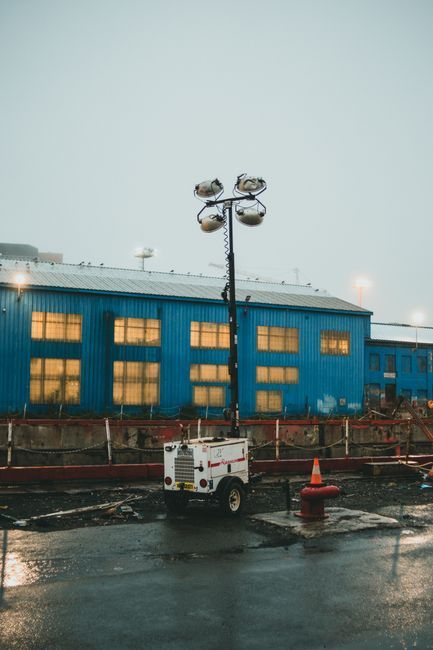
Temporary construction lighting and WHS in Queensland
Temporary construction lighting is part of creating a visible, controlled, and workable site environment. In Queensland, contractors and site managers need to consider whether lighting is suitable for the work being performed, the movement of people and plant, and the areas that remain active after dark.
This article is general guidance only and does not replace project-specific WHS advice, lighting design, or legal compliance checks. However, it highlights the practical lighting issues construction teams should work through before night works, early starts, or extended shifts begin.
Lighting should match the work being done
Different construction tasks require different lighting outcomes. General access lighting may be suitable for walkways, entries, amenities, and compounds, while detailed work areas may need stronger, more targeted illumination.
Plant movement zones, crane areas, loading zones, and excavations need careful planning because shadows, glare, and uneven coverage can create visibility issues. The aim is to support workers, operators, and supervisors with lighting that makes the work area clear without creating new hazards.
For staged projects, lighting should be reviewed as site conditions change. A setup that worked during early bulk works may not suit structural works, fit-out, service installation, or changed traffic routes.
Access, egress, and pedestrian routes
Temporary lighting should support safe movement around the site. This includes site entrances, access roads, pedestrian walkways, stair zones, loading areas, temporary car parks, muster points, and emergency access routes.
Lighting placement should reduce dark spots where workers move between areas. It should also consider glare for drivers, operators, and neighbouring properties. In some cases, several smaller lighting points may provide better visibility than one high-output tower placed in the wrong location.
For temporary roads, detours, or public interfaces, lighting should be considered alongside traffic management planning and project requirements.
Equipment selection and site controls
Temporary lighting equipment should be selected for the environment. Towable towers can suit mobile works and changing work fronts. Solar street lights can suit longer-term access routes or temporary roads. Hybrid and LED towers can support higher-output work areas or extended operations.
Site teams should consider stability, access for refuelling or servicing, cable management, weather exposure, noise, emissions, and the likelihood that lighting will need to move during the project. If the site has restricted access, these details should be addressed before delivery.
Good lighting also supports other site controls, including signage visibility, exclusion zones, plant separation, and emergency response areas.
Review lighting before work starts
Lighting should be checked before work begins, not only after problems are noticed. A pre-start review can identify glare, shadows, failed fittings, poor placement, or areas where temporary lighting no longer matches the work layout.
Site Light Rentals can help construction teams choose temporary lighting for compounds, access routes, plant areas, night works, and staged project needs. View the lighting products page or contact the team to discuss temporary construction lighting hire.